We built a multi-coutnry booking platform. The core logic, search, availability, and reservations, worked fine. Launch in market one went smoothly. Then came market two, and things started breaking in places we hadn't looked.
None of the failures were about the booking engine itself. They were about assumptions. Assumptions baked into the code from day one, written for a single market, never questioned until a second one showed up and made them visible.
This is what broke, why it broke, and how we fixed it.
The Currency and Tax Assumptions That Didn't Survive Contact With Market Two
We built a parking sharing platform for the European market. Private parking owners list their spaces, drivers book them by the hour or day.
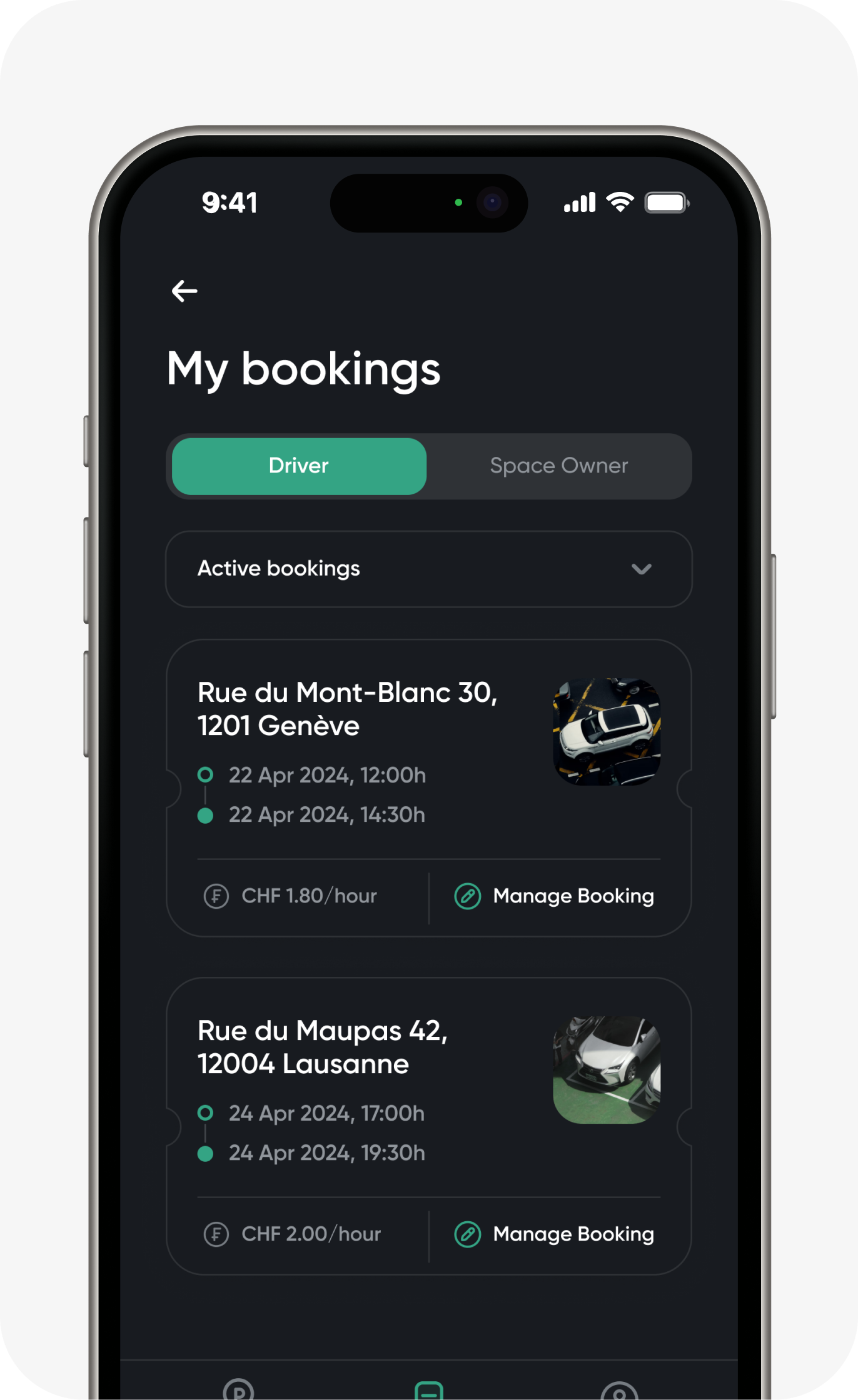
Switzerland has four official languages, two dominant currencies in everyday use, and a VAT structure that is more nuanced than most Western European markets.
The first region used a single currency, a single VAT rate, and one dominant payment provider. So that's what got built. Not out of laziness, but out of reasonable scoping. You build for what exists. The problems showed up the moment we expanded.
The currency formatting bug
The app wasn't just storing a currency code. It was formatting amounts with assumptions about symbol position, decimal separators, and rounding rules baked directly into the display logic.
In Switzerland this mattered immediately. CHF and EUR don't format the same way, and Swiss number formatting uses apostrophes as thousand separators rather than periods or commas.
For example, the Swiss German locale (de-CH) uses apostrophes as thousand separators. A value meant to display as CHF 1'250.00 was rendering incorrectly for users in the second region. Small visually, but trust-breaking in a product that handles payments.
The fix required touching more files than expected. We moved all currency formatting through a single locale-aware utility using the Intl.NumberFormat API, feeding it both the currency code and the user's locale. One source of truth, no hardcoded symbols anywhere in the codebase.
The VAT problem
Switzerland has a standard VAT rate but also reduced rates that apply to specific service categories.The tax engine didn't know how to ask what category a booking belonged to. It just multiplied by one rate, every time.
We rebuilt the tax layer as a rules engine:
- Service category is passed alongside the booking request
- Jurisdiction is determined from the listing location
- The engine returns the applicable rate for that combination
It added complexity, but it made every future region a configuration problem rather than a code problem.
The payment provider gap
Switzerland has strong adoption of TWINT, a local mobile payment method that isn't supported by every international payment provider. The integration built for the first region had no TWINT support. Local users didn't trust the alternative and in some cases simply couldn't complete a booking on mobile.
This required a full second payment integration. We abstracted the payment layer into a provider-agnostic interface first, then plugged both providers in behind it. Checkout now selects the right provider based on the user's region. Adding another market means adding a provider implementation, not rewriting checkout.
The pattern across all three failures was the same. Each assumption was invisible until it wasn't. Multi-currency app development and international tax compliance don't announce themselves as problems during single-market development. They wait.
Timezones Broke Things We Didn't Expect
Switzerland observes CET in winter and CEST during daylight saving time. Timezone bugs have a reputation for being obvious. In practice, on a platform where a parking booking can be be as short as 30 minutes, they are anything but.
How the bug presented
The booking system was storing timestamps in server time. Slot availability was calculated using server-local timestamps instead of timezone-aware datetimes. As a result, bookings were interpreted according to the server's timezone rather than the parking location or user's local time.
Two specific failures came out of this:
- Slots near midnight were being calculated against the wrong date on the server. A driver booking the last available hour of their Tuesday was sometimes booking the first slot of the server's Wednesday, which was already taken.
- When daylight saving time shifted, a one-hour window of parking slots either vanished or appeared twice depending on the direction of the clock change.
Both caused real double-bookings on the app. Both were invisible in testing because the test environment shared a timezone with the server.
The fix
The solution had two non-negotiable parts.
UTC storage everywhere. All timestamps moved to UTC. No exceptions, no server-local times in the database. A booking is stored as a UTC moment, full stop.
Explicit timezone-aware rendering. The timezone associated with each parking location is stored alongside the booking and used for availability calculations and display. UTC timestamps are converted into the appropriate local timezone whenever slots are rendered or validated.
Calendar sync
The booking app lets drivers export bookings to their calendar. Those exported events were being generated with naive datetime strings, so a booking at 10am local time would show up at 10am in whatever timezone the user's calendar app happened to be set to.
We switched all calendar exports to use explicit UTC offsets in the datetime string. The event now anchors to the right moment everywhere, on any device, in any calendar app.
Timezone handling in a booking system sounds like a solved problem. It mostly is, as long as you treat UTC storage and timezone-aware rendering as non-negotiable from day one. On the application we didn't get there fast enough, and we paid for it during a clock change on a weekend when nobody was watching.
Our Database Was Fine for One Market and Fell Over for Two
Single-market traffic is relatively predictable. Demand clusters around commute hours, and the database handles concurrent writes without much trouble.
Expanding into another market increases the number of simultaneous booking attempts and extends the duration of peak traffic, exposing concurrency issues the original architecture was never designed for.
Our booking app felt this when the second region came online.
What the load pattern actually looked like
In the first market, peak booking activity happened between 7am and 9am and again between 5pm and 7pm. The database handled concurrent writes during those windows without issue.
When the second region launched, those peaks didn't simply double. They overlapped in ways that created longer sustained windows of high write activity, with spikes where both markets were booking simultaneously.
The specific failure mode was write contention on parking space availability records. When two drivers attempted to book the same spot within milliseconds of each other, both reads would return the spot as available, both writes would proceed, and one booking would silently overwrite the other. The user whose booking was overwritten received a confirmation. The spot was not actually theirs.
This is a classic booking system race condition, and it is embarrassing to encounter it in production rather than in a design review. But it only became a real problem at the concurrency levels the second market introduced.
What monitoring caught and what it missed
The error wasn't surfaced by application-level error tracking. Both writes succeeded from the database's perspective. What flagged it was a spike in customer complaints about confirmed bookings being unavailable on arrival, cross-referenced with booking records that showed two confirmed reservations for the same spot in the same time window.
Monitoring gaps that made this worse:
- No alerting on duplicate confirmed bookings for the same slot
- No visibility into database lock wait times
- Query performance dashboards existed but weren't being reviewed against concurrency metrics
By the time the pattern was identified, it had affected a small but real number of bookings.
The Architecture Changes
Three changes went in together. None of them alone would have been enough.
Optimistic locking on availability records. Every parking space availability record gained a version field. Before writing a booking confirmation, the system checks that the version it read at the start of the transaction matches the current version in the database. If another write has happened in between, the transaction fails cleanly and the user is shown a "this spot was just taken" message rather than a false confirmation. Conflict handling became explicit instead of silent.
A booking request queue. Concurrent booking attempts for the same spot no longer hit the database simultaneously. Requests enter a queue and are processed sequentially per spot. This added a small amount of latency to the booking confirmation flow, measured in milliseconds, but it greatly reduced contention for high-demand parking spots.
Read replicas for availability queries. The map view and search results were hitting the primary database for every availability read, competing with write traffic. We separated read and write paths by routing availability queries to a read replica. This reduced load on the primary significantly during peak overlap windows and brought query times back to the levels the first market had experienced alone.
What We'd Do Differently
The optimistic locking should have been there from day one. It's not a scaling optimization, it's a correctness requirement for any system where two users can compete for the same resource. The queue and read replica were legitimate scaling responses to the second market, but the locking was a bug fix dressed up as an infrastructure change.
Database scaling for booking systems isn't primarily about raw throughput. It's about making concurrent writes safe before you need to, not after users have booked spots they can't use.
Payment Providers Are Not Interchangeable Across Borders
There is a common assumption in early product development that payment integration is a one-time problem. You pick a provider, integrate it well, and move on. That assumption holds for a single market. Across borders, payment infrastructure becomes one of the most market-specific layers in the entire stack, and the gaps show up in ways that directly kill conversion.
While working on this booking app, we learned this in three distinct ways.
Provider Coverage and Local Payment Method Gaps
Stripe is an excellent payment provider. It is also not the right answer everywhere. Switzerland has TWINT, a local mobile payment method with over 5 million active users in a country of 8.7 million people. For many Swiss users, TWINT is the default way to pay for everyday transactions. It is not a niche option.
The initial app integration didn't include TWINT. The assumption was that card payments through Stripe would be sufficient. In practice, a meaningful segment of users reached the payment screen and dropped off. Some simply preferred TWINT. Others, particularly older users, didn't have their card details saved on their phone and weren't going to enter them for a parking booking.
Stripe tested over 50 payment methods and found that offering at least one relevant local option beyond cards increased conversion by 7.4% and revenue by 12% on average. In a market like Switzerland where TWINT is the default for everyday transactions, not offering it is a conversion problem from day one.
Adding TWINT required a separate integration. We used this as the forcing function to abstract the payment layer properly, with a provider-agnostic interface that Stripe and TWINT both sit behind. The checkout flow selects the right provider based on user location and preference. Every new market now requires a provider implementation, not a checkout rewrite.
Settlement currency mismatches
Payment providers settle funds in specific currencies, and those currencies don't always match what parking space owners expect to receive. The booking app spot owners in Switzerland expect to be paid in CHF. Some provider configurations settle in EUR by default, applying a conversion at settlement time using the provider's own exchange rate.
This created two problems. First, spot owners were receiving slightly less than expected due to conversion spread, with no transparency about where the difference came from. Second, the accounting logic in the app was comparing booking values in one currency against settlement values in another, producing reporting figures that didn't reconcile cleanly.
The fix involved being explicit about settlement currency at the provider configuration level and separating the concepts of booking currency, display currency, and settlement currency in the data model. They are not the same thing and should never share a field.
Fraud rules tuned for the wrong market
This one is less obvious and more damaging. Payment providers train their fraud detection models on transaction data from their largest markets. A transaction pattern that looks completely normal in Switzerland can trigger fraud flags if the model was primarily trained on UK or US data.
On our booking app, short-duration, low-value, repeat transactions from the same card were getting flagged. A driver who parks twice a day in the same city, paying CHF 3 to CHF 8 per booking, looks like a card testing pattern to a fraud model that doesn't have enough Swiss parking context. Legitimate users were seeing declined transactions with no clear explanation.
Stripe's own documentation acknowledges that Radar rules need to be tuned per business model. The default rules are built for e-commerce, not for high-frequency, low-value service transactions.
We worked through three changes:
- Custom Radar rules that account for the expected transaction frequency and value range for parking bookings
- 3D Secure configured as step-up authentication only for transactions that exceed a risk threshold, rather than applied universally
- Explicit allowlisting of verified repeat users whose transaction history confirms legitimate behaviour
The decline rate on legitimate transactions dropped significantly after these changes. But the cost was engineering time that hadn't been budgeted, on a problem that looked like it was solved the moment Stripe went live.
The Real Lesson
Multi-region payment processing is not about connecting to more providers. It is about understanding that each market has its own payment culture, its own preferred methods, and its own risk profile. A provider that works perfectly in one market can actively damage conversion and trust in another.
The decision about which payment providers to support should happen at the same time as the decision to enter a new market, not after the first user complaints arrive. By the time you are debugging fraud rules in production, you have already lost some of the users you were trying to serve.
What We'd Architect Differently From Day One
If you know multi-region is on the roadmap, even as a maybe, the time to make certain decisions is before you write the first line of production code. Retrofitting these patterns onto a live system is possible. It is just significantly more expensive than building them in from the start.
Here is what we would do differently on this booking app.
Currency-agnostic data models
Never store a monetary value without storing the currency alongside it. Never format a monetary value anywhere except the display layer. Amount and currency code travel together through the entire stack, and all formatting goes through a single locale-aware utility. This costs almost nothing to set up and saves weeks of refactoring later.
UTC everywhere, from day one
All timestamps are stored in UTC, no exceptions. Timezone conversion happens at the rendering layer, using the user's explicitly captured timezone. Daylight saving transitions become a display concern rather than a data integrity risk. This is a one-line architectural decision that prevents an entire category of booking correctness bugs.
A Payment abstraction layer before you have two providers
Build the interface before you need it. A thin abstraction layer between your checkout flow and your payment provider costs a day of engineering upfront and saves weeks when you add a second provider, which you will. TWINT, Klarna, iDEAL, BLIK: every market has its preferred methods, and none of them are Stripe.
Regional load isolation
Design your infrastructure so that a traffic spike in one region cannot degrade availability in another. Separate read and write paths from the beginning. Add optimistic locking to any resource two users can compete for. A queue in front of high-contention writes is cheap to add early and painful to retrofit under load.
The common thread is that none of these decisions require knowing exactly which markets you will enter. They just require accepting that you will enter more than one.
Building multi-region from the start? Let's do more than just the code.
The problems in this article are all default assumptions that made sense for one market and became bugs in two. Perpetio builds mobile products and scalable backends for founders thinking beyond their first market.
If you are scoping a booking platform or any location-based product that needs to work across borders, get in touch before you commit to an architecture you will have to unpick later.
FAQs
What breaks when scaling a booking platform across multiple countries?
The core booking logic rarely breaks. What breaks are the assumptions built around it: currency formatting, tax rates, payment provider coverage, database write patterns, and timezone logic that was never wrong in one market and immediately wrong in two.
How do you handle timezones correctly in a booking or reservation system?
Store everything in UTC with no exceptions, and convert to the user's local timezone only at the rendering layer using a timezone value explicitly captured from the user. Those two rules prevent the vast majority of booking correctness bugs that come from daylight saving transitions and cross-border edge cases.
Why do payment providers differ across countries for booking platforms?
Provider coverage, settlement currency mismatches, and fraud models trained on the wrong market all compound each other. The right answer is a payment abstraction layer that lets you plug in the right provider per market, combined with fraud rules tuned to your actual transaction profile rather than the provider's defaults.