Local LLM Flutter App. Part 2: RAG
Previously, we shared how to integrate a local LLM into a Flutter app. Today, we will add the RAG to the equation.
Claude Opus 4.6 scored 80.84% on SWE-bench Verified in February 2026: the benchmark that measures whether a model can actually fix real GitHub issues. That number matters because it's the point where repo-wide refactoring stops being a party trick and starts being something you can ship with.
By 2026, this has shifted AI tools integrated into modern development workflows, such as Cursor GitHub Copilot and LLM agents have introduced a third option, the hybrid model, combining professional developers with AI.
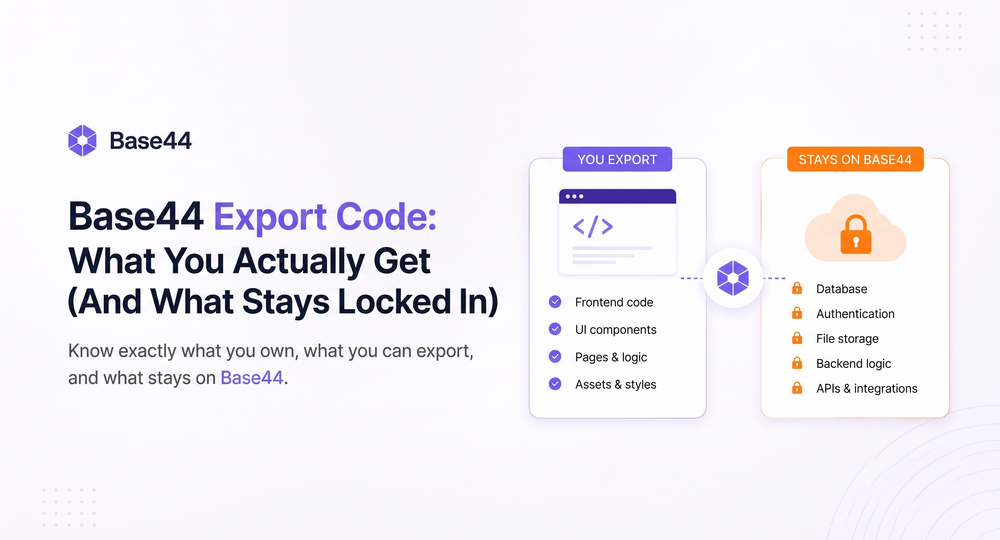
Base44 is one of the most talked-about vibe-coding tools right now. You describe what you want, and it generates a working web app: database, UI, and logic included. For the right use case, it’s genuinely impressive.
We spent real time inside Bolt.new, building an actual app from a single prompt. This article is the honest version of what we found: the good, the genuinely impressive, and the parts where you will want a real developer in the room.
Liquid design is often seen as the next generation after responsive design. Instead of adapting only to screen sizes, it also adapts to user behavior, context, and flow.
We’re probably all familiar with AI tools for writing by now, like ChatGPT or Claude. That’s where it started for most people. Then AI got pretty good at working with code. And now, it’s moving into design.
In this article, we’ll look at how this changes the development process in practice. From traditional workflows to AI-supported ones, and what that means for speed, quality, and overall cost.
As a team that works closely with startups and helps turn ideas into real products from scratch, we’ve seen what actually works in practice. And don’t worry, we are not going to talk about another “build your own ChatGPT” or “AI translator” idea 😅