Vibe Coding vs. AI-Assisted Development: What's the Difference?
Open LinkedIn today and you will probably see vibe coding everywhere. Someone built an app in a weekend. Someone else says they replaced an entire development team with a few prompts.
Healthcare has always run on a simple loop: something goes wrong, a person notices, and only then does treatment begin. This is AI preventive healthcare in practice, and it depends on AI health risk scoring models that turn raw physiological data into something a person can actually act on.
For the past three years, "AI strategy" mostly meant "which API do we call." That's changing. A growing number of product and engineering teams are pulling specific AI workloads out of the cloud and running them directly on the user's device.
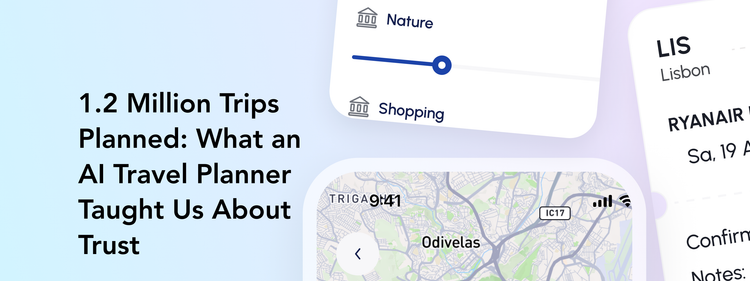
Across 1.2 million plans, we watched users trust the AI enough to book and watched them quietly abandon good itineraries for reasons that had nothing to do with itinerary quality. This article is about what separated the two.
Previously, we shared how to integrate a local LLM into a Flutter app. Today, we will add the RAG to the equation.
Claude Opus 4.6 scored 80.84% on SWE-bench Verified in February 2026: the benchmark that measures whether a model can actually fix real GitHub issues. That number matters because it's the point where repo-wide refactoring stops being a party trick and starts being something you can ship with.
We’re probably all familiar with AI tools for writing by now, like ChatGPT or Claude. That’s where it started for most people. Then AI got pretty good at working with code. And now, it’s moving into design.
In this article, we’ll look at how this changes the development process in practice. From traditional workflows to AI-supported ones, and what that means for speed, quality, and overall cost.
Fatigue is one of the most underestimated risks on construction sites. It builds up slowly but affects reaction time, decision-making, and overall safety in a very real way.