A new insurance claim can come with a surprisingly messy pile of information. There might be photos of the damage, a policy PDF, a claim form, emails from the customer, and several paragraphs of notes from an adjuster. Before anyone can decide what happens next, someone has to go through all of it and figure out what kind of claim they are dealing with.
Because insurers are handling thousands of claims, this first review can take a lot of time, so a straightforward claim can end up waiting in the same queue as a complicated one.
AI can take some of that work off the adjuster’s plate. One system can look at the damage photos, pull relevant details from the policy and claim documents, and pick up useful information buried in the adjuster’s notes. Put those pieces together, and the insurer can get a much clearer picture of the claim before it reaches the next person in the process. The final decision can still stay with a human.
What Triage Actually Involves and Why It's Hard to Automate
Claims triage comes down to one question: where should this claim go next?
An adjuster looks at several things before making that call. Damage photos show what happened and policy documents show what is covered. Add the historical claim records and adjuster notes for the context that may not appear anywhere else.
The problem is that these inputs do not come in the same format. A claim amount or policy number is easy to process because it is structured data. A photo of a damaged roof is different. So is a paragraph in an adjuster’s notes describing what the customer reported and what the adjuster noticed during an inspection.
Traditional rules engines handle the first type well because you can tell a system to send claims over a certain value to a particular team, for example. Asking the same system to understand a photograph or pick out useful information from free text is much harder.
Insurers are already using AI to tackle parts of this process. Aviva has deployed more than 80 AI models across its claims operation and improved the accuracy of routing claims to the right teams by 30%, according to McKinsey. The same case study reports a 23 day reduction in the time needed to assess liability for complex claims.
Image analysis can help with another part of the puzzle. In a PwC case study, an insurer used AI to identify and classify vehicle damage from customer-submitted photos. PwC estimated 29% efficiency savings for the estimator team if the approach was fully implemented.
But now you need to combine these inputs: a photo that shows the damage plus the policy that shows the coverage. Additionally, an adjuster’s notes can explain the context. Claims complexity scoring becomes much more useful when the system can work with all three.
The Multimodal Architecture: How Images, PDFs and Text Work Together
A claims triage system has to deal with several very different types of information. One model is unlikely to handle all of them equally well, so a practical multimodal AI insurance setup can split the work into three layers.
1. Vision model for damage photos
The vision layer looks at photos submitted with the claim and extracts information about the visible damage. For an auto claim, for example, it might identify the damaged parts, estimate the apparent severity, and flag images that need closer inspection.
Research published through the ACM describes a similar approach for insurance claims, combining policy information with a visual damage analysis module that identifies damaged areas and their severity. The researchers reported an 8.2% improvement in adjudication accuracy compared with existing methods.
2. Document parser for policies and claim forms
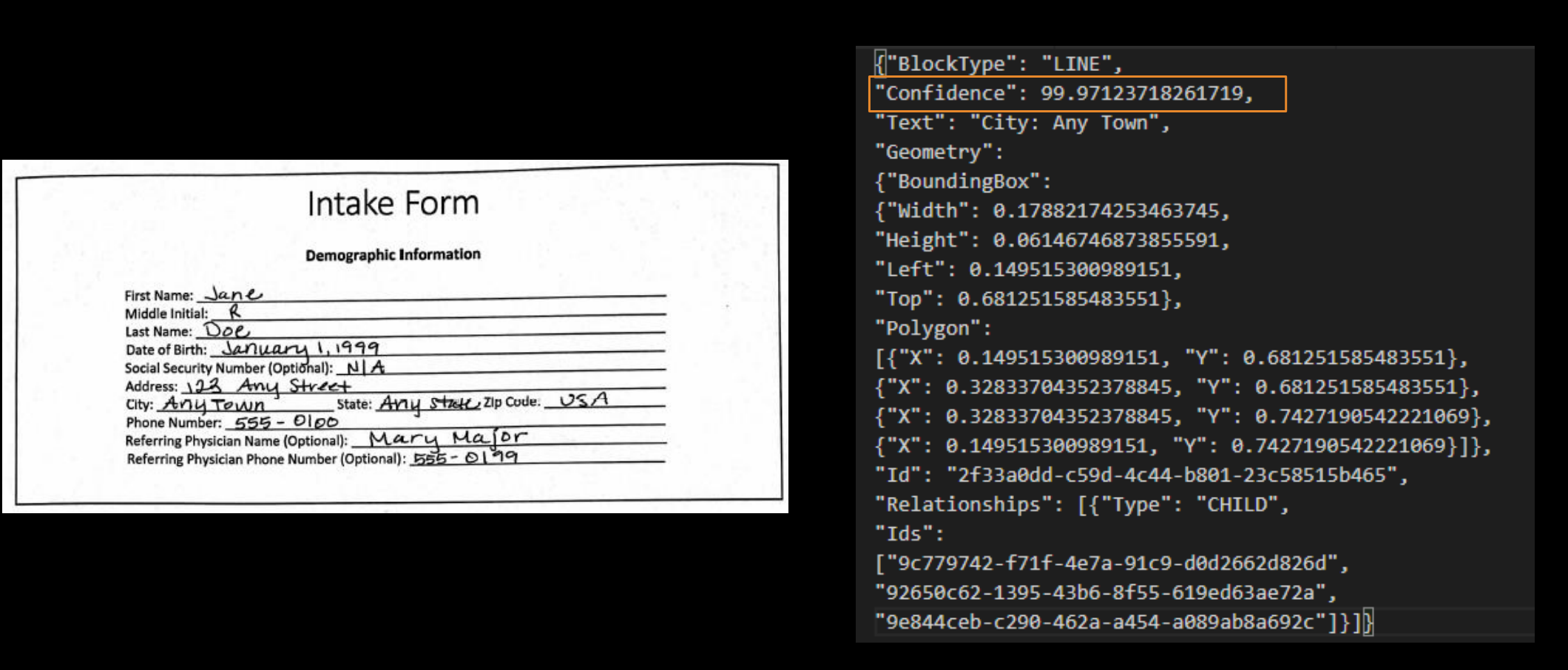
Policy documents and claim forms need a different treatment. AI document processing for insurance PDF can extract fields such as policy numbers, coverage limits, dates, claim types, and other relevant details from PDFs and scanned documents.
AWS uses this approach in its reference architecture for AI-powered claims processing. Its system uses Amazon Textract to analyze claim documents and a large language model to analyze vehicle damage images before the information reaches the adjuster.
3. LLM for adjuster notes and historical claims
Then there is the information that is hardest to put into a neat table: adjuster notes, customer descriptions, emails, and older claim records.
An LLM can extract relevant details from this text and turn them into structured signals. For example, it might identify a previous loss at the same property, mention of pre existing damage, or uncertainty in the adjuster's assessment.
The three layers can then feed a separate scoring and routing layer. It can combine the visible damage, policy details, claim history, and text based signals to calculate a claims complexity score and recommend the next step.
The idea is similar to the approach we explored in our agricultural insurance claims article, where satellite imagery, weather data, field boundaries, and farm records are brought together before a claim reaches an adjuster.
The important part is the handoff. AI does the heavy lifting across different data types, while the final routing decision and claim severity classification can still be reviewed by a human.
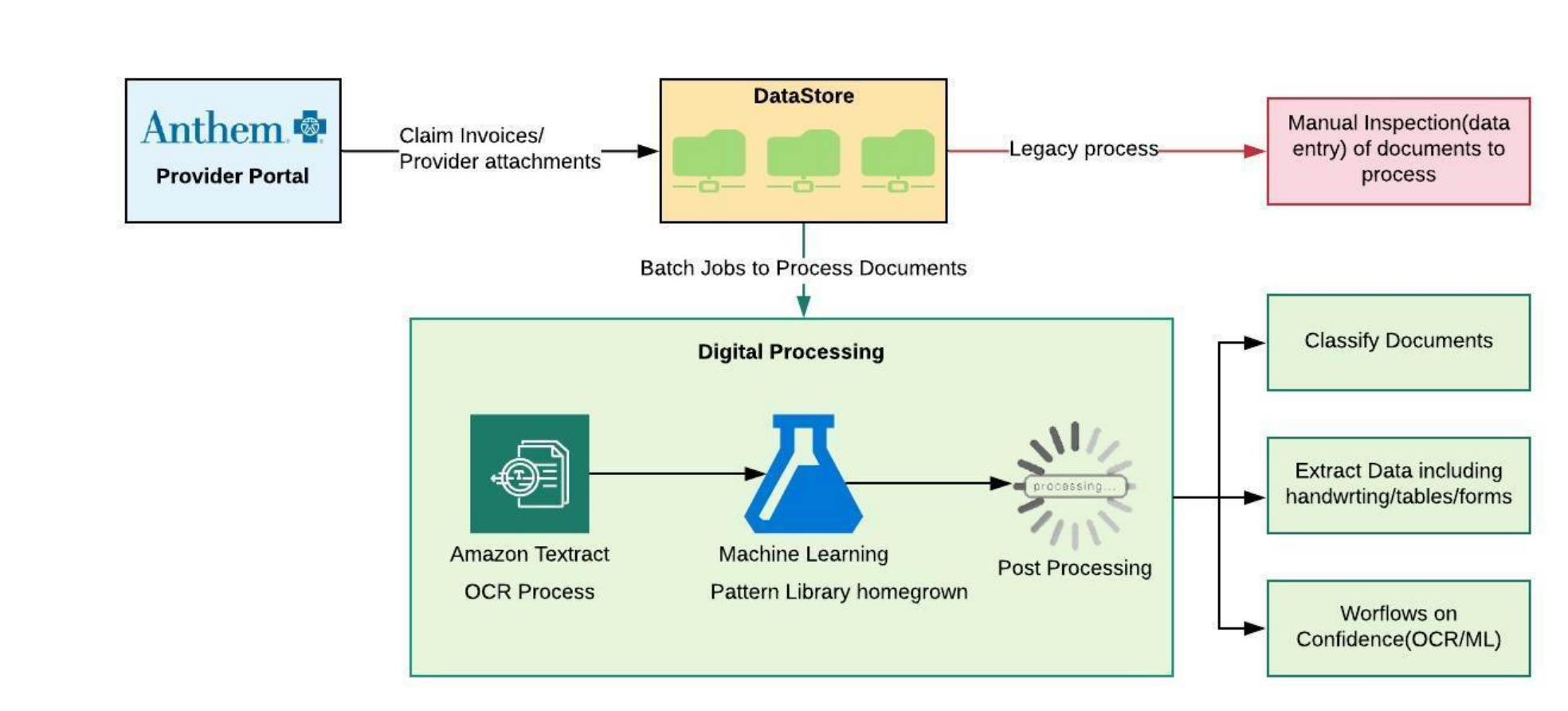
Image Analysis: Assessing Damage Before a Human Reviews It
Claim photos can contain useful information long before an adjuster opens the case. A vision model in AI image analysis damage assessment can examine those images and identify the type of damage, the affected area, and visual signs that may indicate how severe the loss is.
For example, in an auto claim, the model could identify a damaged bumper, broken headlight, or dented door. In property insurance, it could flag roof damage, broken windows, water stains, or other visible signs of a loss. The output does not need to be a final repair estimate. At the triage stage, it is more useful as a set of signals that helps determine what should happen next.
Pre-existing damage is another useful signal. If an image shows wear or damage that appears unrelated to the reported incident, the system can flag the claim for closer review. It should not decide that the damage is pre-existing on its own. That distinction still needs human assessment and the wider claim context.
There are also obvious limits. A blurry photo, poor lighting, an obstructed view, or a single image from the wrong angle can make even a straightforward case difficult to assess. Unusual damage presents another problem because the model may have little relevant visual information to work with.
A PwC insurance case study shows how this can work in practice. Its AI system analyzed vehicle photos to identify damaged areas and parts, with PwC estimating 29% efficiency savings for the estimator team if the approach was fully implemented.
For triage, the goal is not to replace the adjuster. It is to give them useful information before they start reviewing the claim manually.
Document Parsing and Extracting the Right Data From Unstructured PDFs
A claim rarely arrives with all the information already sitting in the right fields. Policy documents, claim forms, repair estimates, police reports, and other third party documents often come as PDFs or scanned files.
The first job in PDF extraction insurance is to turn those documents into usable data. OCR can read text from scanned pages, while document analysis can identify tables, forms, key value pairs, and other elements. For example, Amazon Textract can extract text, forms, and tables from PDFs and other document formats.
The type of document matters, though. A claim form is usually structured. The system knows where to look for the policy number, date of loss, claim amount, or claimant details. A policy document is less predictable. Coverage limits and exclusions might sit inside a table or several pages of legal text. A third party report can be even less structured, with important details buried in a narrative.
So extracting the words is only half the job. The system also needs to understand what those words mean for the claim. A sentence mentioning an exclusion, for example, should not be treated the same way as a simple policy field in OCR insurance claims.
We see a similar problem in other document-heavy industries. In our article on AI in mortgage lending, we look at how intelligent document processing can handle the large volume of forms and legal documents involved in mortgage applications.
For insurance, the extracted information can then become structured signals for the triage system. Coverage limits, exclusions, dates, claim details, and information from third-party reports can all be combined with the damage analysis and adjuster notes before the claim is routed.
Adjuster Notes are The Hardest Input to Process and the Most Valuable
Adjuster notes can contain some of the most useful information in a claim. They can also be the messiest.
An adjuster might record what the customer reported, what they saw during an inspection, whether there was previous damage, what documents are still missing, or why they think a claim needs further investigation. None of this follows a fixed format, and two adjusters may describe the same situation in completely different ways.
An LLM can turn these notes into structured signals through adjuster notes AI analysis. It can extract people, locations, dates, damaged items, previous incidents, and other relevant entities. It can also identify statements about the severity of the loss, uncertainty in the assessment, or details that do not match the rest of the claim.
There can be useful fraud signals here too. A note might mention conflicting accounts, repeated losses, or damage that appears inconsistent with the reported event. The model can flag those details for investigation, but it should not decide that a claim is fraudulent based on the text alone.
The same flexibility that makes LLMs useful also creates noise. Notes can contain irrelevant details, shorthand, typos, incomplete observations, or assumptions made during an early inspection. An AI system needs to separate useful evidence from everything else without turning a vague observation into a definite fact.
That makes adjuster notes particularly valuable for triage. Photos can show what the damage looks like, and policy documents can show what is covered. Notes can explain why the claim might be more complicated than it first appears.
Research from McKinsey also highlights unstructured claims data such as adjuster notes and claim descriptions as an area where generative AI can help insurers extract information that was previously difficult to use at scale.
Routing Logic: From Complexity Score to the Right Desk
Once the system has processed the images, documents, and adjuster notes, the outputs need to lead to an actual next step, which is claims routing automation.
The complexity score can help determine where the claim goes:
- Straight-through processing: simple claims with clear damage, straightforward coverage, and no unusual signals can move through with minimal manual review.
- Specialist queue: complex claims with severe damage, unclear coverage, conflicting information, or previous losses can go to an experienced adjuster.
- Investigation: claims with several potential fraud indicators can be flagged for a closer review.
The routing logic can combine signals from all three layers instead of relying on one field for straight-through processing insurance. A damaged roof, for example, might look straightforward from an image alone. Add an exclusion in the policy and a note about previous damage, and the claim may need a different route.
There also needs to be an escape hatch when the AI is not confident. Poor quality photos, missing documents, unusual damage, or conflicting information can trigger human review.
The adjuster does not have to start from zero because can see the information already extracted by the system and focus on the parts that need their judgment.
That is what human in the loop looks like in practice. AI handles the repetitive analysis and routing work, while people stay responsible for cases that need context and judgment.
For insurers, the opportunity is not simply to add an AI model to the claims process. It is to connect the data already coming in through photos, policy documents, claim forms, and adjuster notes, then turn it into useful information before a claim reaches the next desk.
At Perpetio, we build AI solutions for complex business workflows, including systems that work with multiple data types and keep human review where it matters. If you are looking at claims triage automation, document processing, or a broader insurance AI product, talk to our team about your claims workflow.
FAQs
What is insurance claims triage automation?
Insurance claims triage automation uses AI to review incoming claim information and determine how the claim should be handled next. It can analyze damage photos, policy documents, claim forms, and adjuster notes, then classify the claim by complexity and route it to straight-through processing, an adjuster, or an investigation team.
How does AI analyze damage photos for insurance claims?
AI uses computer vision to identify visible damage in claim photos, such as damaged vehicle parts, dents, broken windows, or roof damage. It can estimate the apparent severity, flag potential total-loss cases, and identify photos that need further review. The results become signals for claims triage rather than a final coverage or claims decision.
Can AI extract data from unstructured insurance PDFs reliably?
Yes, AI can extract useful information from insurance PDFs, including policy numbers, dates, coverage limits, exclusions, tables, and claim details. OCR and document AI can handle scanned documents as well as digital PDFs. Reliability depends on document quality and complexity, so extracted information should be validated and important decisions should remain subject to human review.
What is straight-through processing in insurance claims?
Straight-through processing (STP) means a claim moves through the claims workflow automatically without manual intervention at each step. For a simple claim with clear coverage, consistent information, and no warning signs, AI can help validate the available data, assess complexity, and route or process the claim automatically. More complicated or uncertain claims can still be sent to a human adjuster.