In recent years, MVP development was a clear trade-off: either build everything manually with significant time and cost, or use low-code tools like FlutterFlow and sacrifice flexibility for speed.
By 2026, this has shifted AI tools integrated into modern development workflows (such as Cursor, GitHub Copilot, and specialized LLM agents) have introduced a effective third option: the hybrid model, combining professional developers with AI.
This approach removes the main advantage of low-code platforms: fast initial builds. As a result, FlutterFlow is moving toward interactive prototyping (instead of static Figma), while using it for real MVPs increasingly creates long-term scalability and maintenance risks.
Why FlutterFlow is Only for Prototypes, Not MVPs
Low-code tools sell an appealing illusion of speed and cost efficiency. However, when building a real product, businesses inevitably face three critical limitations:
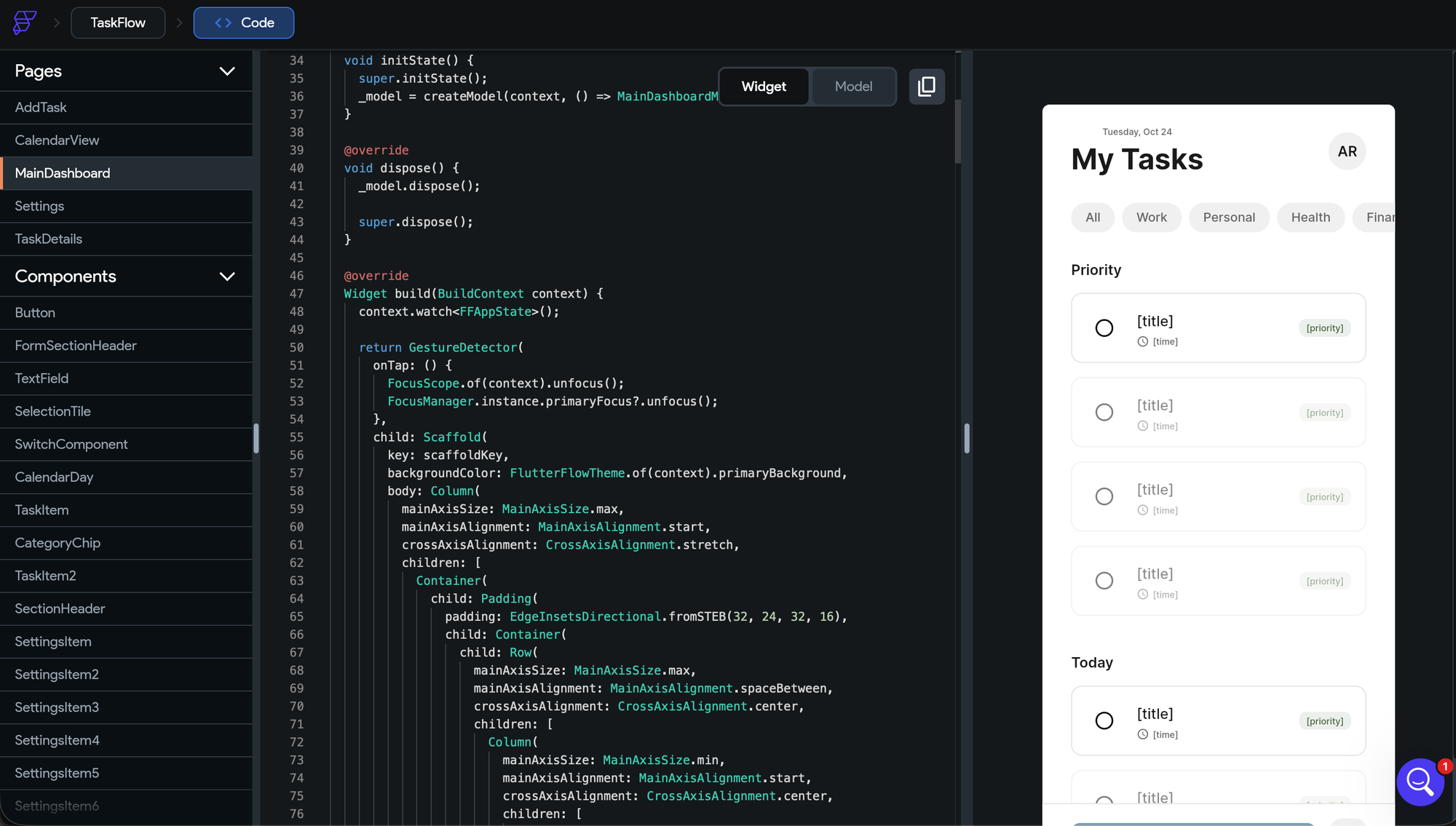
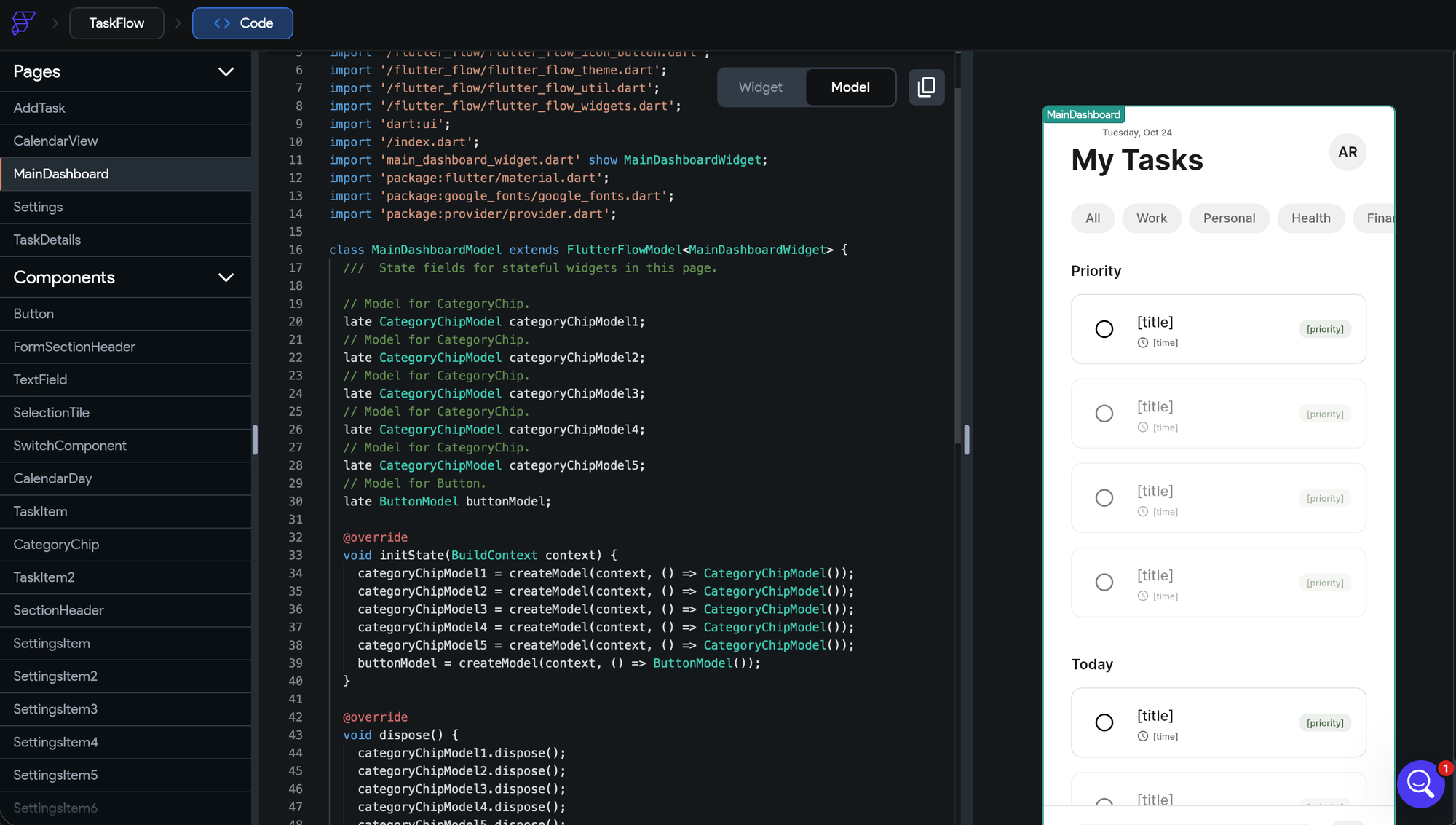
- Architectural dead-end and messy code generation: FlutterFlow generates code based on its own rigid structure. Page logic and UI are tightly coupled with auto-generated models (for example, classes like
AddTaskModelinitialized directly inside the page's widget). Separating business logic into clean, isolated layers (Clean Architecture) is not possible. As requirements evolve daily during MVP development, visually rearranging these connections becomes harder than rewriting the code itself.
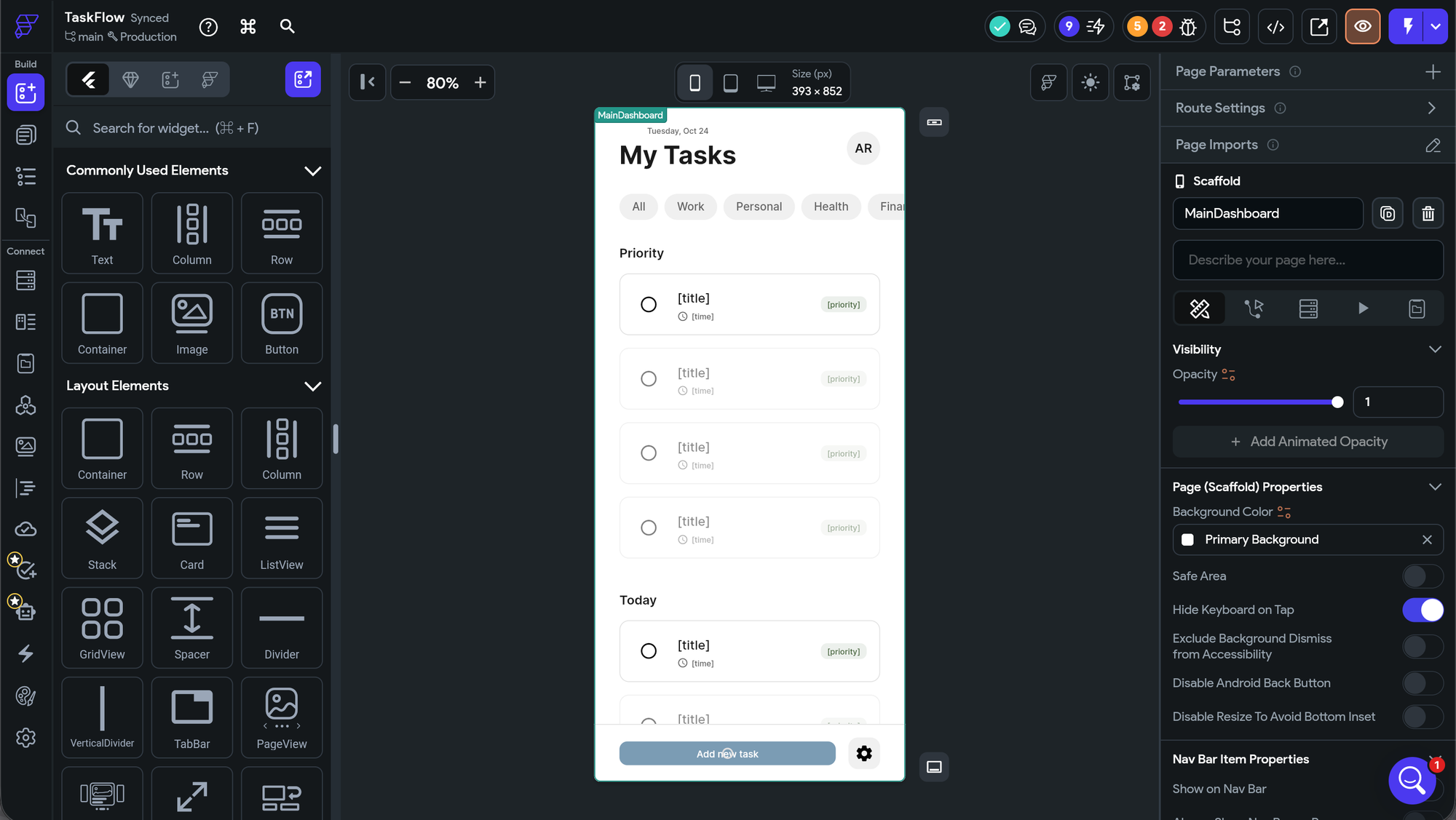
- Custom function limitations: Building 3-5 static screens is easy. But once real business logic appears (custom validation, local caching, background processes, encryption), developers are forced to constantly write Custom Actions using the limited platform. At this point, FlutterFlow stops helping and starts getting in the way.
- Vendor lock-in and financial dependency: The project becomes dependent on the FlutterFlow ecosystem, its pricing model, updates, and platform availability.
Hybrid Approach (Human + AI): How It Works in Practice
The hybrid approach removes the repetitive burden of classical programming while preserving its core value — full freedom, flexibility, and control over code.
- AI as a boilerplate generator: The most repetitive parts of Flutter development — models, JSON serialization, basic widgets, constants can now be generated in seconds. The developer simply asks the AI: “Create a clean data model for Task with fields title, priority, date and toJson/fromJson methods.” The assistant delivers it instantly and without syntax errors.
- Architecture defined by humans: The developer defines the architecture from the very beginning (for example BLoC or Riverpod + Clean Architecture). AI generates individual building blocks (UI components, services), while the human controls the system structure and relationships.
- UI speed is now comparable: Modern AI models can generate adaptive Flutter UI from screenshots, UI kits, or text descriptions in seconds using Material 3. The developer then simply integrates it into the architectural layer.
Architecture and State Management as the Foundation of Business
Architecture and state management are not about “clean code aesthetics”. They directly impact business cost and scalability.
Separation of concerns
In FlutterFlow, business logic is often scattered across buttons, actions, and screen configurations. In hybrid Flutter development, logic is fully separated from UI (e.g., using BLoC/Cubit).
If a business decides to switch from Firebase to PostgreSQL or Supabase, only the data layer changes. UI and business logic remain untouched. In FlutterFlow, such a change requires a full rewrite.
State management as business insurance
In real applications, state is dynamic and complex: users add tasks, navigate screens, lose internet connection, or receive push notifications. Proper state management makes the system predictable and testable.
Unit tests ensure that updates do not break critical features (registration, checkout, payments). FlutterFlow does not support proper automated logic testing.
Easier team scaling (onboarding)
Code written by humans with AI assistance using industry standards (Clean Architecture + BLoC) is understandable for any new developer. Low-code projects, in contrast, are extremely difficult to navigate and require significant onboarding effort.
The “Easy Migration” Trap: Why Transferring Projects Is a Myth
A common startup belief is: “We’ll quickly build an MVP in FlutterFlow, validate the idea, and then just download the code and continue development manually.”
In practice, this turns into a technical and financial nightmare for three reasons:
- Generated code is a black box: FlutterFlow produces code optimized for its own platform, not human readability. Developers receive thousands of lines of overly complex, auto-generated structures that are extremely difficult to refactor.
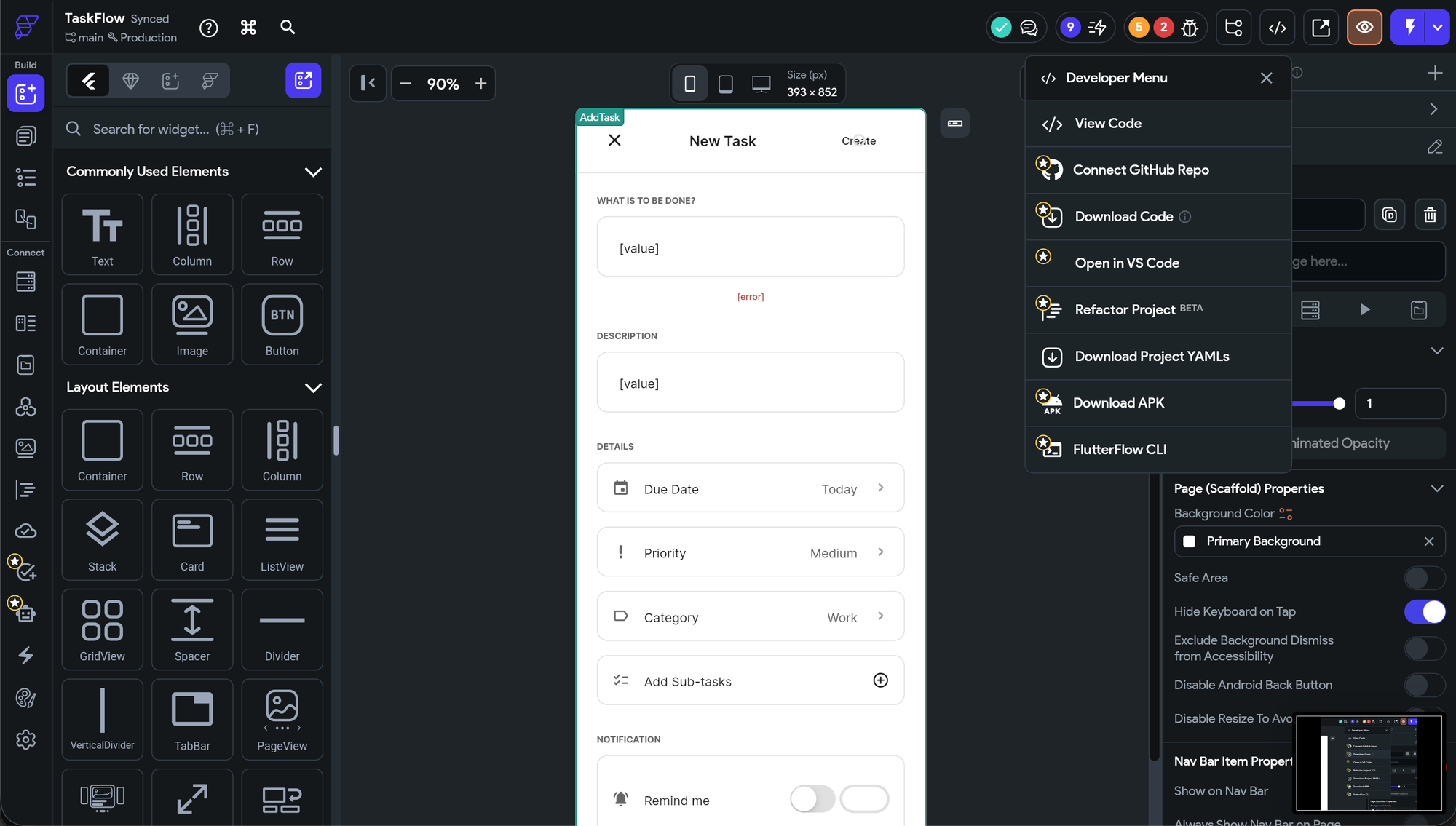
- Architectural resistance: FlutterFlow tightly couples logic into page classes. Introducing proper state management (BLoC/Riverpod) requires invasive restructuring, essentially rewriting large parts of the app.
- Financial inefficiency (double cost): Instead of building new features, developers spend weeks rewriting generated code. Businesses pay both for the low-code platform and then again for senior engineers to clean it up.
MVP with FlutterFlow vs Flutter: a Comparison
| Feature | FlutterFlow (Pure Low-Code) | Hybrid Approach (Human + AI) |
|---|---|---|
| UI creation speed | Very high (visually) | High (AI generates UI from prompts) |
| Code architecture | Rigid, locked into the platform | Flexible (Clean Architecture, BLoC from day one) |
| Testability (QA) | Practically absent for logic | Full coverage with Unit, Widget, and UI tests |
| Migration / Export | Extremely difficult (costs like a full rebuild) | Not needed (code is in your Git from the start) |
| Business scalability | Requires full rewrite | Ready to scale to millions of users |
| Maintenance cost | Grows exponentially with features | Stable and predictable |
Conclusion: The Evolution of Tools
An interactive prototype should not be confused with a production-ready product.
- If you need to quickly build a clickable concept for investors or validate UI ideas, FlutterFlow is a great tool — essentially a Figma replacement with interactivity.
- But if you are building an MVP for a real business intended to scale, evolve, and support users, hire a developer, equip them with modern AI tools, and build clean Flutter code from day one.
In terms of time and cost, both approaches may seem similar initially, but instead of a temporary structure, the hybrid approach delivers a long-term, scalable technical foundation.