Liquid Design: What It Is and Why Your App Needs It In 2026
Liquid design is often seen as the next generation after responsive design. Instead of adapting only to screen sizes, it also adapts to user behavior, context, and flow.
Let’s focus on the role of UI/UX design in the success of mobile apps. Our UI/UX designer shares how a good UI and UX contribute to the app’s positive perception and how to establish a design workflow that incorporates the best features and aligns perfectly with your product’s needs.
Intuitive, simple, eye-catching, user-friendly. These are the adjectives our clients often use to describe the desired UI/UX design of their products. There is one more adjective that is sometimes overlooked yet crucial for the app’s success: engaging.
The invisible UI, sometimes called invisible design or zero UI, is the concept when the user interface of a digital product is so intuitive and effortless that it becomes “invisible” to a user.
What’s the first thing you pay attention to when opening a mobile app? Let us guess: you check out its design, which is a perfectly logical thing to do.
Many of us tend to believe that fintech apps just have to be boring and a bit complicated. But why? Wouldn't we all be happy to use a simple enough, intuitive, and even fun banking app? Learn how to make a solution like this and overcome some possible challenges.
Creating UI/UX design for an NFT platform can be quite a challenge: how do you incorporate blockchain's complex mechanism into an easy-to-use platform? Find all the answers in this material.
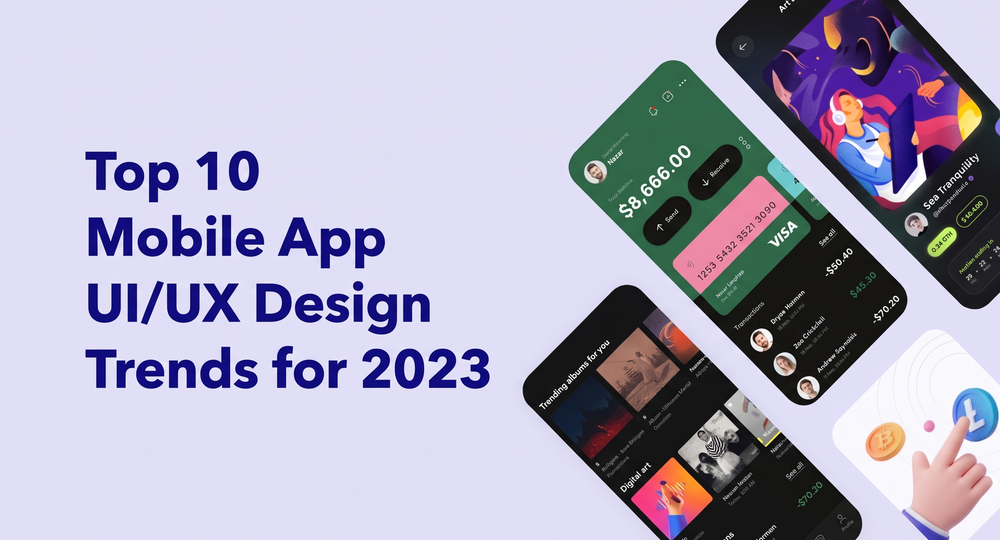
2023 has just started, so it’s high time to explore the mobile app UI/UX design trends. Learn how to impress your users with unusual UIs and innovative UX approaches.
Microinteractions turn a good product into a great one. They give users hints on how to navigate the interface, let them take control over their journeys, and give a human touch to the experience. Learn how microinteractions improve designs and how to use them in your product. Examples included.